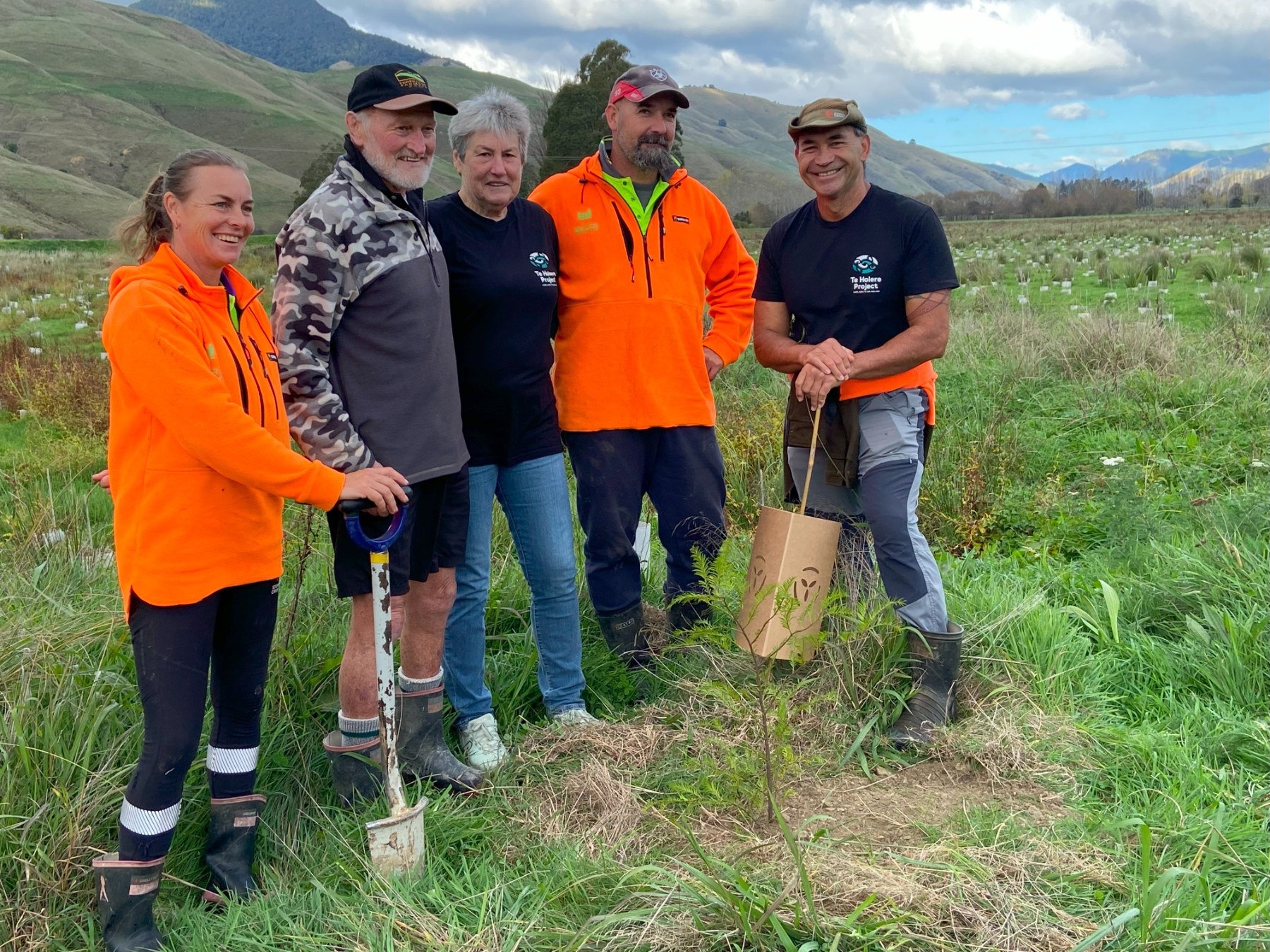
On Queen Charlotte Drive, adjacent to the treatment ponds and opposite the Link Pathway, Marlborough District Council is restoring its land that's not suitable for future grazing. It's ideal for establishing riparian and wetland planting, improving freshwater quality, sediment capture, and providing biodiversity corridors. In Spring 2022, stage 1 was planted with 14,000 plants at over 2.9 hectares, including carex, cabbage trees, manuka, kanuka, lemonwood, kohuhu, totara, kahikatea, harakeke, mingimingi and a few other species. Care was taken in the planting plan to allow the area to remain a functional floodway.
Care has also been taken to ensure plant survival with EmGuard™, which are biodegradable plant guards made from recycled pulp. These guards reduce maintenance costs and prevent pukekos from pulling out recently planted seedlings. Because the guards are biodegradable, they do not need to be removed once plant establishment has occurred as they will naturally break down. If by chance, the guards wash into a waterway, they will naturally biodegrade over time.
Stage 2 of the causeway project was planted in Spring 2023, with an additional 1.1 hectares of the same species mix. Stage 3 spans just under 8 hectares, planted in 2024. The area is now planted out with 48,300 plants, with contractors working on plant maintenance through Spring 2025 and Autumn 2026.
This restoration has been funded through the Ministry for the Environment's At Risk Catchment fund, as well as Department of Conservation’s Jobs for Nature programme. The Project has partnered with J&S Mears Contracting and Outward Bound for labour, with many of the plants supplied for this project from a horticulture programme at Rolleston Prison.
Related News
200,000 plants in the ground
Prisoners roll up sleeves for project